
School boredom: The Secret to Keeping Kids Engaged
Despite decades of research into children's development, the education system remains anchored in outdated methods, failing to evolve alongside how information is accessed, absorbed, and applied in today’s world. Although technology has revolutionized how we learn—offering instant access to global knowledge, interactive experiences, and real-world applications—the structure, materials, and delivery of education remain relics of the past.
Our children are growing up in a fast-paced digital world; however, they are still being taught with outdated methods. These methods were designed for an era when information was limited and learning was confined to textbooks and classrooms.
The disconnect between how children naturally engage with information today and how they are forced to learn in school is not just an oversight—it is a failure to prepare them for the realities of the future. The world has changed drastically. Our education system, unfortunately, has not.
Our children are bored with school
More importantly, the emerging skill sets and subjects that align with evolving workforce demands are often overlooked, causing curriculums to become disconnected from the challenges and opportunities of the future. As a result, children are not only underprepared for the world they will enter but also disengaged from the learning process itself.
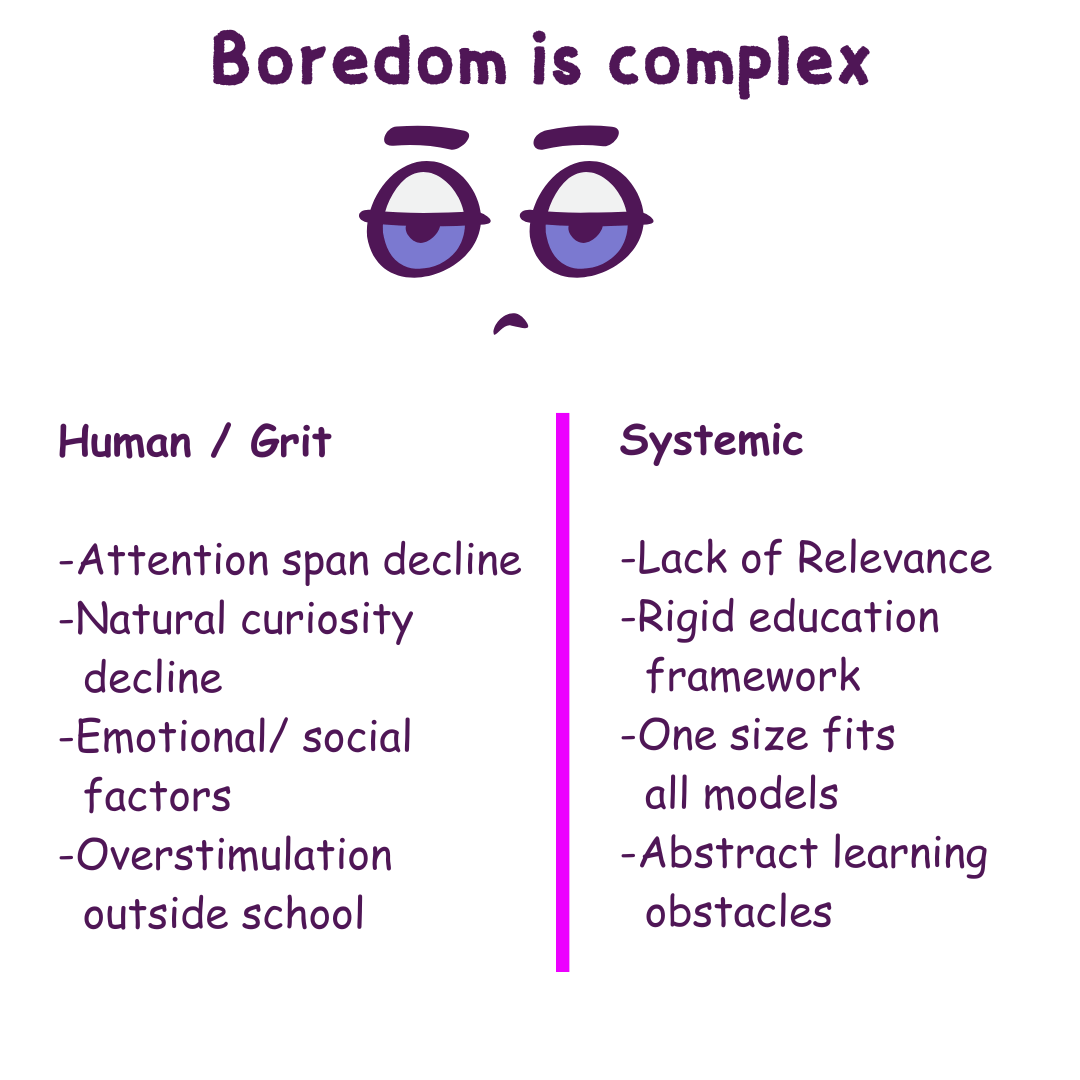
According to various studies cited in an article published in Harvard Ed. Magazine, Zachary Jackson (2017) highlights a concerning trend emerging from research on children's school experiences: boredom. Our children seem to be bored out of their minds! While boredom is often regarded as a minor issue, its impact on education is far from trivial. Once seen as a temporary consequence of routine, boredom has now become a widespread crisis. It leads to disengagement, diminished motivation, and increased absenteeism.
As children progress through school, the gap between their natural curiosity and the outdated teaching methods they encounter regularly, only widens. If we continue to ignore the systemic roots of this problem, we risk failing many new generations. Instead, we need to create dynamic, interactive, and relevant learning methods and experiences that evolve along with them.
The #1 Reason: RELEVANCE
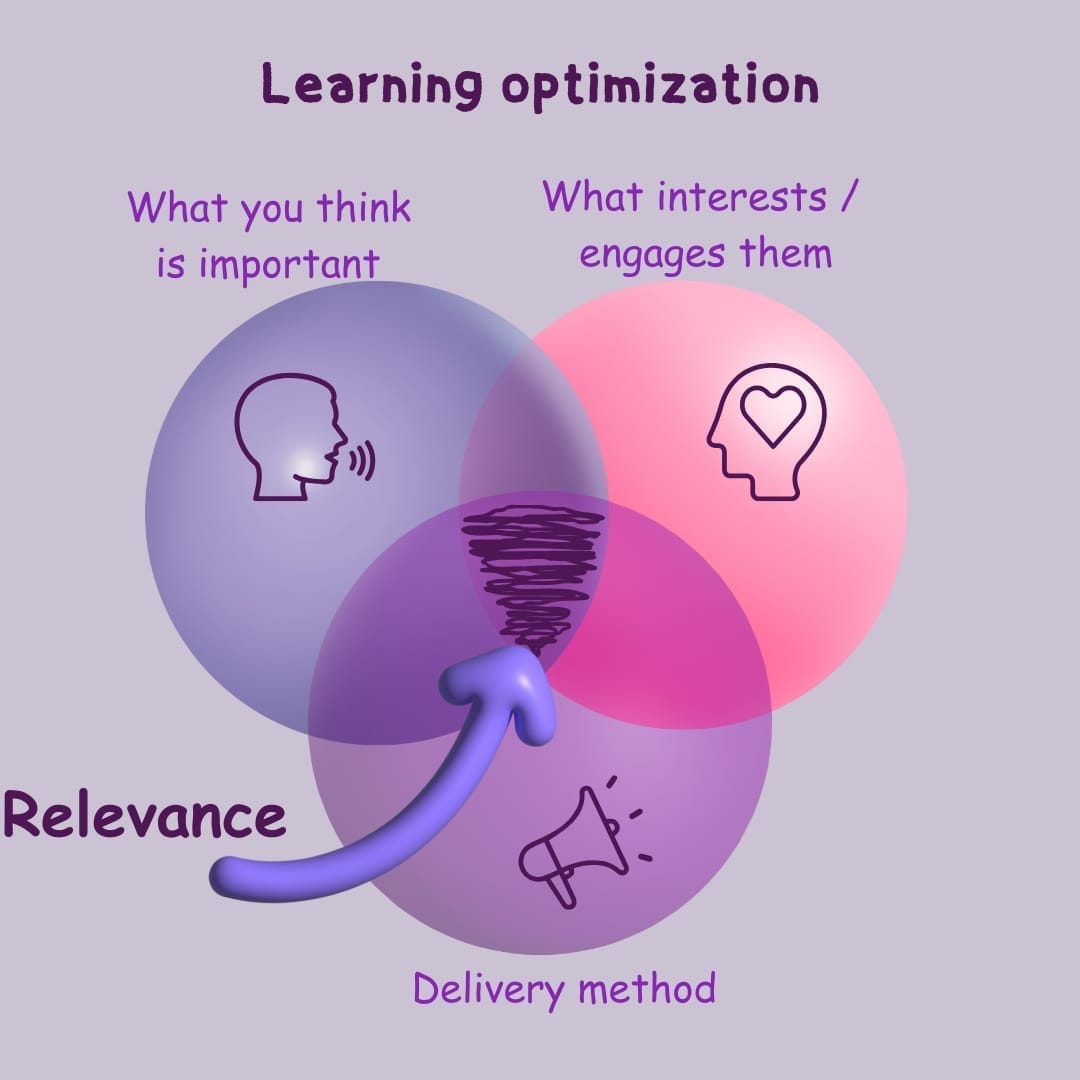
Upon surveying educators and psychologists, researchers found that the cornerstone of their findings on why children are bored with school lies in relevance. When students understand why they are learning something and see its value in their lives, they are more likely to stay engaged. Engagement, rather than entertainment, is the antidote to boredom. It fosters curiosity, resilience, and a deeper connection to learning.

Addressing boredom isn’t about making school more entertaining; it’s about making it more meaningful.
Until the school system adapts to stimulate children in a way that mirrors their experiences outside the classroom and incorporates meaningful learning, our children will struggle to find significance in what they learn. As a result, they may not pay attention as needed, or even at all.
Igniting Young Minds in a Stale School System
We do not however dismiss that boredom in children is a multifaceted issue that stems from both systemic and individual factors. These factors can all be contributors to boredom, of which relevance is but one.
All the more reason to start treating it with the respect it deserves. Children go through many changes as they grow into adults, and if we do not take note of the complexities that affect their education, we might be missing out on valuable opportunities to make this time of their lives as purposeful as possible.
Learning optimization redefined
Digital technology and social media offer instant gratification that traditional classrooms struggle to compete with. The delayed rewards of academic achievement often feel underwhelming by comparison.
As a result, boredom—when it leads to disengagement, rising absenteeism, and a growing sense that school is no longer worth the effort—should not be dismissed as trivial. It directly affects how children learn, and by extension, shapes their future.
What can we as educators and parents do to help?
We can help bridge the gap between outdated schooling and real-world relevance by showing children that, even when school feels disconnected from their lives, it lays the foundation for their future roles in society.
Introducing extracurricular modules or activities focused on financial education is good place to start—especially since these topics are often overlooked in traditional schooling. Since one of the core purposes of education is to prepare children for the workforce, it’s essential to make learning about finances and life after school both engaging and practical. We aim to spark and ignite a passion for their future career possibilities. This approach ensures they are equipped to understand key adult responsibilities, such as earning a living and managing money, once they the world of work.
While extracurricular activities often focus on hobbies like music, sports, and the arts—which are valuable and may lead to careers for some—what all children have in common is the need to provide for themselves one day.
We may not be able to change the education system entirely, we can adapt our approaches to make learning feel purposeful, helping children understand not just what they are learning, but why it matters.
References:
Jackson, D., 2017. Bored out of their minds. [online] Harvard Graduate School of Education. Available at: https://www.gse.harvard.edu/ideas/ed-magazine/17/01/bored-out-their-minds [Accessed 3 Apr. 2025].